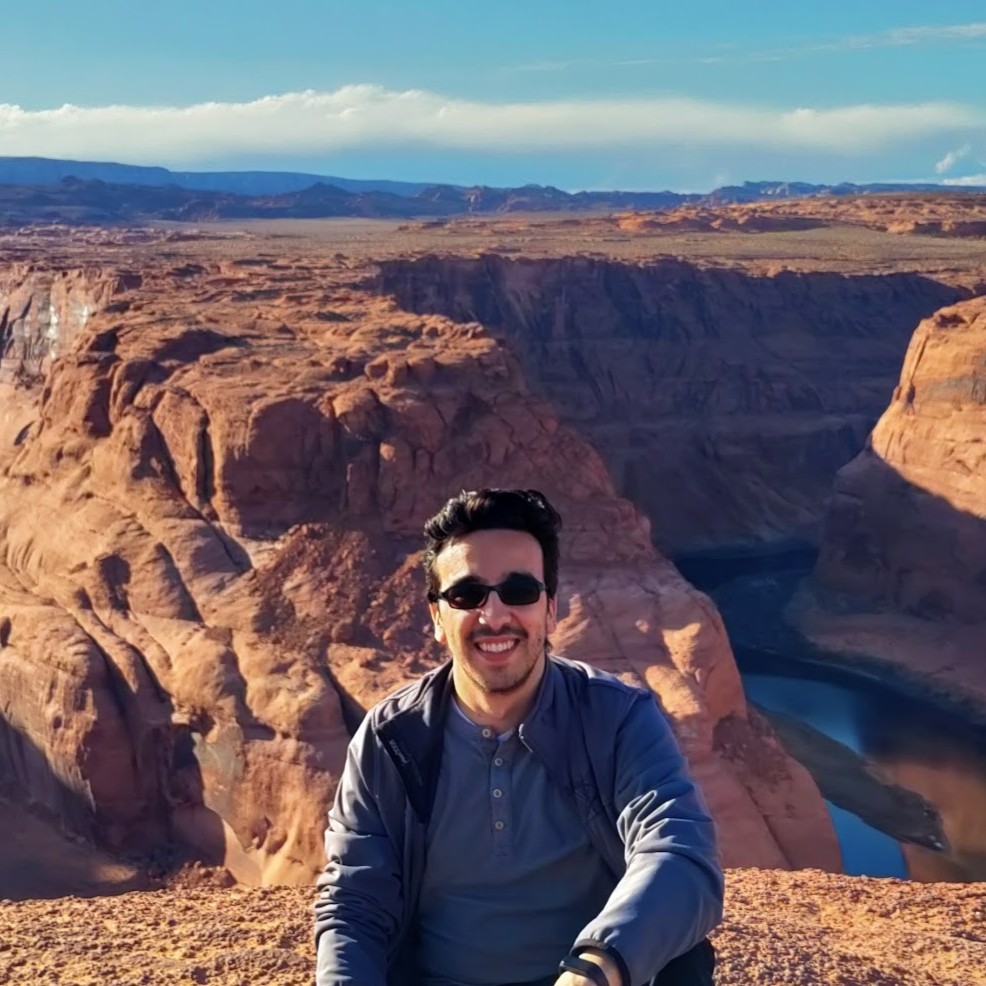
Hector Lise de Moura
Senior Researcher | Data Scientist
I am a Senior Researcher and Data Scientist with a background in electrical engineering and expertise in machine learning and deep learning applications. My research focuses on developing solutions for complex data problems, particularly in medical imaging and signal processing. I have a track record of publications in peer-reviewed journals and successful project implementations.
Projects
Predictive Modeling for Post-Surgical Osteoarthritis Risk
Developed a predictive model to identify patients at high risk of developing post-traumatic osteoarthritis after ACL reconstruction surgery. Integrated and analyzed multimodal data, including MRI scans, clinical reports, demographic data, and functional patient metrics, to identify leading indicators of disease progression. The project involved identifying complex patterns and risk factors in medical datasets to forecast outcomes — a process directly analogous to identifying indicators of fraud or financial risk in transactional data.
Technologies: Python, Machine Learning, Medical Imaging, Data Integration, Risk Assessment
Impact: Early risk identification, improved patient outcomes, data-driven healthcare decisions
Advanced Ultrasound Signal Processing for Equipment Inspections (AUSPEX)
Led the development of software and inspection tools for Petróleo Brasileiro S.A. (Petrobras), creating methods to increase the reliability of submarine pipeline inspections while reducing operational costs.
Technologies: Python, PyTorch, Qt5, NumPy, SciPy, CUDA, WebAssembly, Git, CI/CD
Impact: Enhanced submarine inspection reliability, reduced costs, improved safety protocols
View Project Page →Knee Cartilage and Bone Segmentation
Developed a pipeline for image reconstruction and automatic segmentation of MRI images of the knee, eliminating the need for manual segmentation by radiologists. This method achieved 4th place out of 87 competing teams at the 2022 MICCAI K2S Challenge.
Technologies: Python, PyTorch, SLURM, Medical Imaging, Deep Learning
Impact: Reduced manual segmentation time by 90%, improved process reliability
Multi-modal Imaging Super-resolution for Sodium MRI
Developed a fusion technique that combines low-resolution images with higher-resolution images from various MRI contrasts to enhance the resolution of sodium MRI. The method reduced inference time from ~616s using PLS methods to ~1.2s using a dual-encoder Y-net architecture.
Technologies: Python, PyTorch, SLURM, Multi-modal Imaging, Neural Networks
Impact: 500x speed improvement, maintained image quality, enabled real-time processing
View on GitHub →Recent Publications
Simultaneous Bilateral T1, T2, and T1ρ Relaxation Mapping of Hip Joint With 3D‐MRI Fingerprinting
Anmol Monga, Hector Lise de Moura, Marcelo VW Zibetti, Thomas Youm, Jonathan Samuels, Ravinder R Regatte
Three‐dimensional MR fingerprinting (3D‐MRF) has been increasingly used to assess cartilage degeneration, particularly in the knee joint, by looking into multiple relaxation parameters. A comparable 3D‐MRF approach can be adapted to assess cartilage degeneration for the hip joint, with changes to accommodate specific challenges of hip joint imaging.
View Publication →Fine‐Tuning Deep Learning Model for Quantitative Knee Joint Mapping With MR Fingerprinting and Its Comparison to Dictionary Matching Method
Xiaoxia Zhang, Hector L De Moura, Anmol Monga, Marcelo VW Zibetti, Ravinder R Regatte
Deep learning (DL)–based methods for quantification mapping in MRF overcome the memory constraints and offer faster processing compared to the conventional dictionary matching (DM) method.In this study, we investigate the impact of training parameter choices on NN performance and compare the fine‐tuned NN with DM for multiparametric mapping in MRF.
View Publication →Optimized MR pulse sequence for high‐resolution brain 3D‐T1ρ mapping with weighted spin‐lock acquisitions
Marcelo VW Zibetti, Rajiv Menon, Hector L De Moura, Mahesh B Keerthivasan, Ravinder R Regatte
To implement and evaluate the feasibility of brain spin–lattice relaxation in the rotating frame (T1ρ) mapping using a novel optimized pulse sequence that incorporates weighted spin‐lock acquisitions, enabling high‐resolution three‐dimensional (3D) mapping.
View Publication →Feasibility of a UTE Stack‐of‐Spirals Sequence for Biexponential T1ρ Mapping of Whole Knee Joint
Hector L de Moura, Mahesh B Keerthivasan, Marcelo VW Zibetti, Pan Su, Michael J Alaia, Ravinder Regatte
This study investigates the feasibility of a UTE Stack-of-Spirals sequence for biexponential T1ρ mapping of the whole knee joint, aiming to improve the accuracy and efficiency of knee joint imaging.
View Publication →MR electrical properties mapping using vision transformers and canny edge detectors
Ilias I Giannakopoulos, Giuseppe Carluccio, Mahesh B Keerthivasan, Gregor Koerzdoerfer, Karthik Lakshmanan, Hector L De Moura, José E Cruz Serrallés, Riccardo Lattanzi
In this paper we developed a 3D vision transformer‐based neural network to reconstruct electrical properties (EP) from magnetic resonance measurements.
View Publication →Education
Ph.D. in Electrical Engineering and Industrial Informatics
Federal University of Technology - Paraná, Brazil
April 2018 – May 2021
M.Sc. in Electrical Engineering and Industrial Informatics
Federal University of Technology - Paraná, Brazil
February 2016 – March 2018
B.Sc. in Electronics Engineering
Federal University of Technology - Paraná, Brazil
July 2011 – December 2015
Skills & Technologies
Machine Learning & Deep Learning
PyTorch, TensorFlow, Scikit-learn, Computer Vision, Image Reconstruction, Segmentation Models
Data Science & Analysis
NumPy, Pandas, SciPy, Matplotlib, Data Visualization, Statistical Modeling, SQL, Data Pipelines
Programming & Development
Python, MATLAB, C/C++, CUDA, Git, CI/CD, Julia, SLURM
Project Management & Other
Communication, Mentoring, Academic Writing, Public Speaking
Awards & Recognition
4th Place - MICCAI K2S Challenge 2022
Knee Cartilage and Bone Segmentation Challenge (87 competing teams)
Summa Cum Laude (Top 5%) at the 2025 ISMRM
Awarded for outstanding academic performance